Current: A B C
Current: Architecture
Click to view medieval people
Current Filter: Architecture
Abacus: The flat slab of stone at the top of a column forming the top of a capital and supporting the arch or wall above it
Abutment: The section of wall to the side of the curving part of the arch erected to counter the thrust of the arch
Aisle: The passages to each side of the nave, separated from the nave by screens or columns
Altar: Flat topped wooden or stone table containing the cross. Usually at the east end of the church (More...)
Alure: The path along the top of a parapet at the top of a wall
Ambulatory: The processional aisle around the apse at the east end of a church
Ampoule: Vessel containing the sacred oil to anoint the kings of France at the cathedral at Rheims
Anglo-Saxon: English architectural style C10-11, followed by NORMAN
Angle: The corner of a building, inner or outer
Apex: The highest point of an architectural feature. A pryramid shape is common
Apse: A semicircular projection usually found at the east end of a church
Apsidal: Ending in a semi-circle
Arcade: A row of arches and columns dividing two places
Arcading: A row of blind arches in a wall, such that the arches are filled in and lead nowhere
Arch: A pointed or curved construction of wedge shaped stones. See Voussoir
Architect: A person competent to design buildings and to supervise their construction
Architrave: The ornamental moulding running around the curve of an arch, a door or window
Archivolt: A moulding carried around an arch
Armature: Metal framework in large untraceried window used to support the stained glass
Ashlar: Hewn and squared stone ready for construction purposes
Atrium: Covered row of columns in front of the door of a church
Bailey: The open area in a castle between the keep and the curtain wall. This area can have working and domestic buildings in it
Ballflower: Ornament in the shape of a flower with a ball surrounded by petals
Balustrade: A row of balusters which are vertical members that support the handrail of a staircase
Baptistry: Area of the church reserved for the administration of the sacrament of baptism.
Bar hole: Horizontal hole to hold a timber bar used for securing a door
Barbican: Outer defences of a castle where attackers would be vulnerable. Normally a double tower over a bridge or gate
Baronial: In terms of architecture typically Scottish and elaborate in nature
Barrel-vault: A tunnel-like semi-circular vault
Barrow: Burial mound built over stone graves
Bartizan: A watch-tower or turret jutting out from the top of a castle (bartisan)
Base course: The lowest course of masonry of a wall or pier
Bastion: A solid tower at the end or middle of a curtain wall
Bastle: Two-story rectangular building where the lower floor is used to house animals and the upper floor for living quarters
Batter: The inside face of a wall
Battlemented: Describes the top of of a wall where there are rows of rectangular teeth. This is also known as crenellated or embattled
Bay: A compartment into which a building is divided. Bays are marked by buttresses, pilasters in the walls, by the position of the main ribs of the vaulting of the interior, etc.
Beading: Small circular objects in a row
Belfry: A bell-tower or campanile
Berm: Strip of ground between the outer curtain wall and the moat
Billet Moulding: Norman ornamental moulding with cylindrical blocks
Blank arcading: See arcading
Blind arcading: See arcading
Boss: An ornamental projection in ribbed vaults used to hide the joins
Brattice: A wooden tower or a projecting wooden gallery at the top of a wall
Bressumer: A beam used as a support for a projection
Breteche: Hoardings: Wooden boards fitted to top of wall used as extra protection for defenders
Broach: an old English term for a spire, or to denote a spire that springs from a tower without an intermediate parapet
Buttress: The projection of stonework at the side or corners of a building to provide strength against the lateral forces
Cable Moulding: A moulding in the form of a rope made from twisted strands
Calefactory: Warming house in a monastery
Cantilever: A projecting beam fixed at one end only
Capital: The stone at the top of a column that supports the abacus and arch above it. The capital is usually carved
Caryatid: A statue in female form used as a supporting pillar
Casemate: Bomb-proof vault in a curtain wall for cannons
Castle: Medieval fortification
Cathedral: The principal church of a diocese where the bishop has the throne
Celestory: Windows or opening set high in a wall to illuminate the area below
Cell: A monastic dependency of a religious house
Chamber: A room on an upper floor for living and sleeping
Chamfer: The surface created by cutting away the angle of a beam along its length.
Chancel: The east end of the church, sometimes divided into the sanctuary and presbytery. Anglo-Saxon and early Norman chancels were normally apsed and later chancels were square
Chapter House: The building where the canons and Dean met each day to hear a chapter of St Benedict's Rule read out and to conduct the business of the abbey
Chevet: East end of a church with an apse surrounded by other smaller ones
Chevron: A zigzag form of ornamentation used in the Norman period
Choir: The area of the church where the choristers and clergy sit
Cinquefoil: A five-lobbed ornament
Clearstory: The upper story or row of windows lighting the nave of the church
Cloister: The rectangular covered area around an open space (garth) of a monastery or cathedral surrounded by covered walkways used for study and meditation. A photograph of the cloister at Lincoln Cathedral
Cob: Walling material of straw and unbaked clay
Column: Circular shaft with base and capital, designed to support the weight above
Concentric: A concentric castle has a series of defences enclosing another
Corbel: A stone jutting from a wall designed to support a roof or floor beam
Corbel table: The horizontal section high on a wall of a church containing carved stone heads
Cove: Concave moulding at junction of ceiling and wall
Crenellation: Notched battlements at the top of a wall
Crocket: A small carved and decorated projection in the form of a flower
Crossing: The point at which the roofs of the four cross-arms of the church met. Below the crossing is the choir
Crowstep: Step-shapes found at either side of the gable end of a building
Cruciform: Cross-shaped. A church with transepts has a cruciform plan
Crypt: Vault or chamber under the church
Cuirass: Medieval armour covering the back (backplate) and chest (breastplate). Plain or ornately decorated
Curtain Wall: The wall around the bailey with a sentry-walk along its top
Cushion capital: Typical in Romanesque work, having a square top and rounded off lower section
Virtual Buildings
Transport yourself back up to a thousand years and explore historical buildings as they may have appeared in the past.
Explore the bailey and wooden tower keep of a Norman motte and bailey castle
Motte & Bailey
Explore all four floors of a Norman square keep similar to Dover Castle that was built in the twelfth century.
Explore a siege landscape and learn about the siege engines used to destroy a castle.
Explore a reconstruction of Stokesay Castle, a fortified manor house from the fifteenth century.
The TimeRef Shield Editor
Create your Coat of Arms
Explore the White Tower
Explore four floors of the keep at the Tower of London.
Instructions
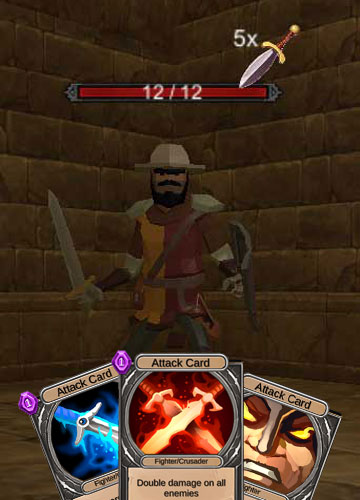
Adventure Game - Early Access
Early Access to the TimeRef card-based Adventure Game.
Medieval Town - Early Access
Explore the medieval town.
Medieval Village - Early Access
Explore the medieval village.
Medieval Abbey - Early Access
Explore the medieval abbey.
Medieval Theatre - Early Access
Explore the medieval theatre.
Medieval Heraldry
Learn about medieval shield design.
Details
Design your own medieval Coat of Arms.
Design your shield